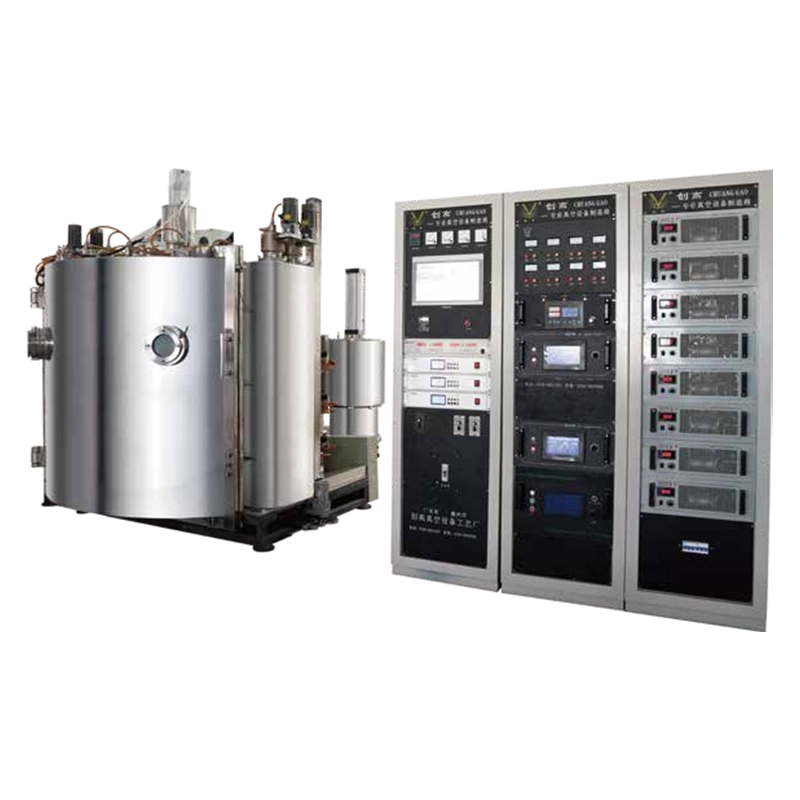
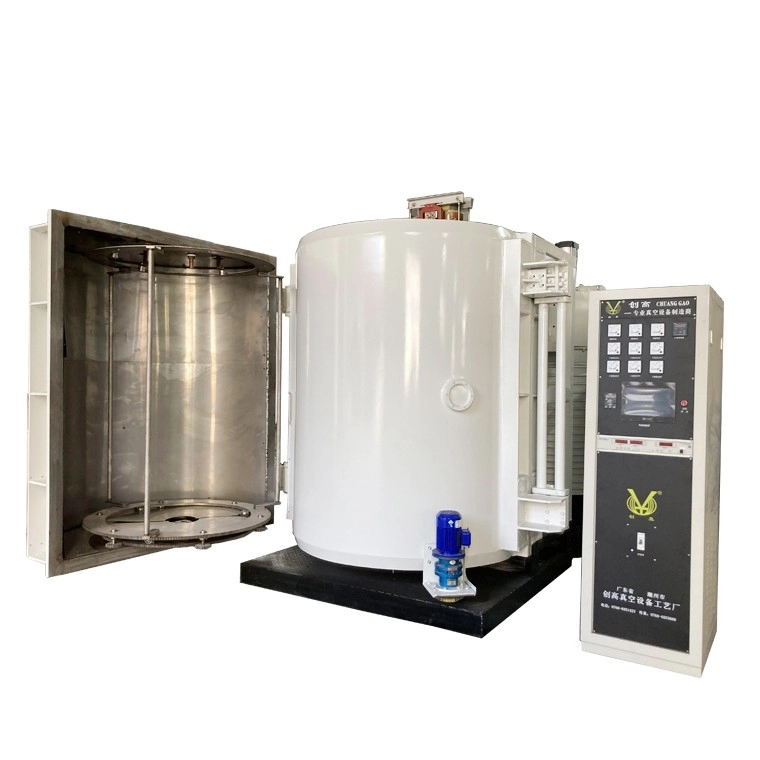
Gold PVD coating is a vacuum deposition process used to create gold-colored or gold-containing thin films on products such as jewelry, stainless steel, sanitary ware, ceramics, glass, and decorative components. Depending on the required appearance and performance, gold PVD may use compounds such as TiN or ZrN to produce a gold tone, or use real Au-based target materials for applications requiring actual gold in the coating.
For manufacturers, the key question is not simply what gold PVD coating is, but how to achieve the required color, adhesion, durability, and batch consistency in production. As a professional PVD coating machine manufacturer, CGVAC combines process evaluation, application-based machine configuration, sample validation, and equipment engineering to help buyers move from a target gold finish to a repeatable production solution.
What Is Gold PVD Coating?
The term PVD gold coating covers more than one coating structure. For B2B buyers, the first step is to distinguish between a gold-colored decorative coating and an Au-based coating.
| Type | Gold-Colored PVD | Au-Based / Real-Gold PVD |
|---|---|---|
| Main Purpose | Gold appearance combined with surface performance | Gold-containing surface or specific gold tone |
| Typical Materials | TiN, ZrN and related compounds | Au, Au alloys or multilayer structures |
| Cost Direction | Generally easier to control for industrial volume | Higher due to precious-metal target materials |
| Main Focus | Color consistency, hardness, and durability | Gold content, color precision and material control |
| Machine Requirement | Multi-arc or magnetron systems depending on the product | Precise target, thickness and process control |
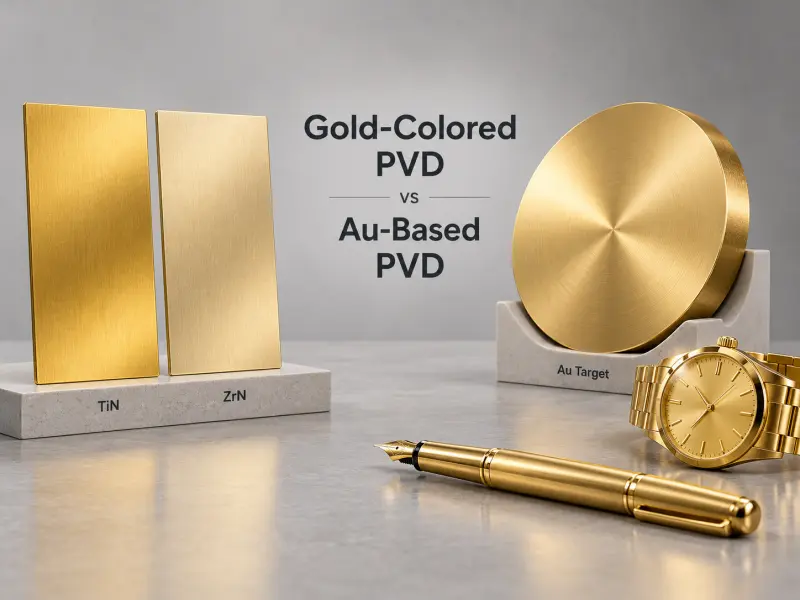
A gold color PVD coating is widely used when manufacturers require a gold appearance together with wear resistance and industrial production efficiency. TiN and ZrN systems are common examples, but the exact tone depends on coating composition and process control.
Au-based PVD is different. Real gold may be used as part of the deposited layer when the product requires actual gold content, a particular color standard, or a premium surface specification.
This distinction matters at the equipment-selection stage. Different target materials and film structures may require different deposition sources, power systems, gas control, vacuum conditions, and process recipes. Therefore, a professional gold PVD coating machine manufacturer should first understand the required coating result before recommending a machine configuration.
How Does Gold PVD Coating Work?
A typical gold PVD coating process follows a controlled sequence: Surface Preparation → Product Loading → Vacuum Pumping → Plasma Cleaning → Target Deposition → Gas & Power Control → Film Growth → Cooling & Inspection
Surface Preparation: Cleaning and polishing create a stable surface condition before coating. Contamination or inconsistent finishing can directly affect adhesion and appearance.
Vacuum and Plasma Cleaning: The chamber is evacuated, and the substrate surface is further cleaned before deposition. Stable vacuum conditions reduce contamination during film formation.
Target Deposition: Metal atoms or ions are released from the selected target through arc ion plating, magnetron sputtering, or another suitable deposition method.
Gas and Power Control: Reactive gas, source power, bias voltage, and process pressure influence coating composition, color, and film properties.
Film Growth: Deposition time and rate determine film thickness and contribute to the final gold PVD finish.
For industrial production, these steps cannot be treated independently. Vacuum stability, target behavior, gas control, fixture movement, and power output must work together. This is why the performance of a PVD coating machine depends not only on the vacuum chamber itself, but also on how the complete process system is engineered.
For CGVAC, equipment configuration is developed together with the required coating process. This helps avoid a common problem in equipment purchasing: selecting a machine first and trying to adapt the product to the machine later.
What Controls Gold Color and Coating Performance?
Producing one gold-colored sample is relatively different from maintaining the same result across continuous batch production. For industrial buyers, the value of gold PVD coating lies in repeatability.
Several factors are particularly important:
| Factor | How It Affects Gold PVD Production |
|---|---|
| Target Material | Ti, Zr, Au and other target materials determine the basic coating composition, gold tone and performance direction. |
| Gas & Process Control | Reactive gas ratio, pressure and process stability influence coating composition and color consistency between batches. |
| Film Thickness | Thickness changes can affect the final gold PVD finish, coverage and coating performance, so deposition rate must remain stable. |
| Substrate & Pretreatment | Material type, polishing, roughness and cleaning affect appearance, adhesion and the consistency of the finished coating. |
| Vacuum Conditions | Stable vacuum helps reduce contamination and maintain repeatable deposition conditions during production. |
| Machine Repeatability | Consistent power output, gas flow, fixture rotation and recipe execution help reduce batch-to-batch color variation and film thickness differences. |
For B2B production, the real challenge is not producing one acceptable gold finish, but maintaining the same gold PVD coating across repeated batches. That distinction is important when evaluating PVD coating machine manufacturers. CGVAC integrates target configuration, vacuum performance, gas control, fixtures, and process settings according to the actual product, helping manufacturers reduce color variation, coating inconsistency, and repeated process adjustment during mass production.
Where Is Gold PVD Used?
Gold PVD coating is used across a wide range of decorative and industrial products. However, different applications require different balances of appearance, adhesion, durability, production temperature, and capacity.
| Application | Typical Products | Main Production Requirement |
|---|---|---|
| Jewelry | Rings, bracelets, pendants, watch parts | Color, surface quality, wear resistance and batch consistency |
| Sanitary Ware | Faucets, shower parts, handles and accessories | Gold appearance, adhesion, corrosion and wear resistance |
| Stainless Steel | Tableware, kitchenware, panels and hardware | Large-batch consistency and durable decorative finish |
| Ceramics | Tableware, gifts and decorative ceramics | Metallic gold appearance and surface uniformity |
| Glass | Decorative glass and packaging components | Uniform coating and controlled visual effect |
| Plastic / Cosmetics | Caps, containers, housings and cosmetic packaging | High-gloss metallic appearance and substrate-compatible processing |
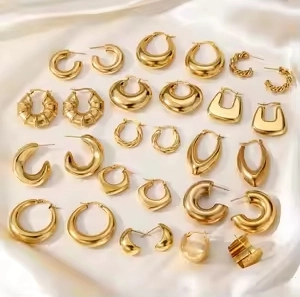


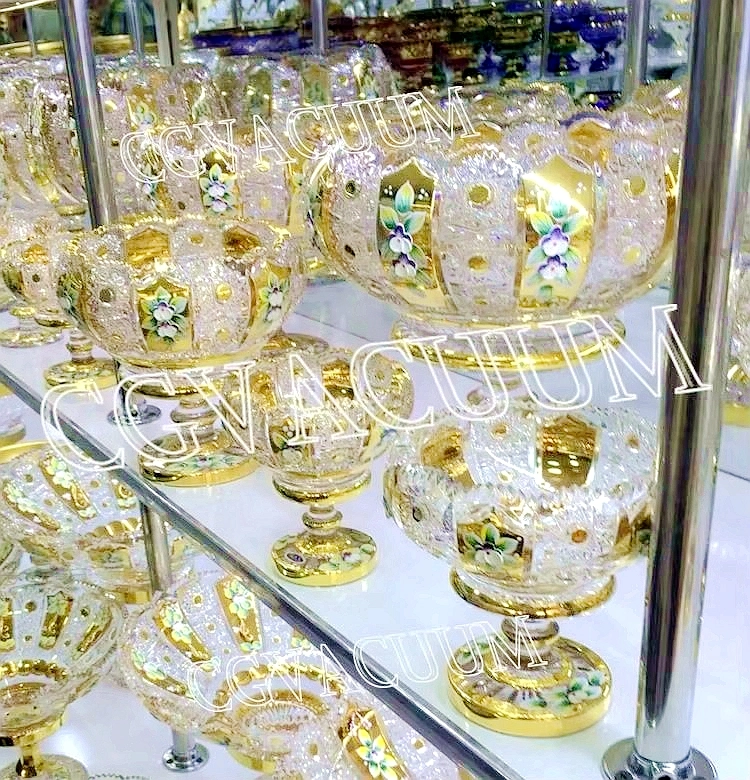
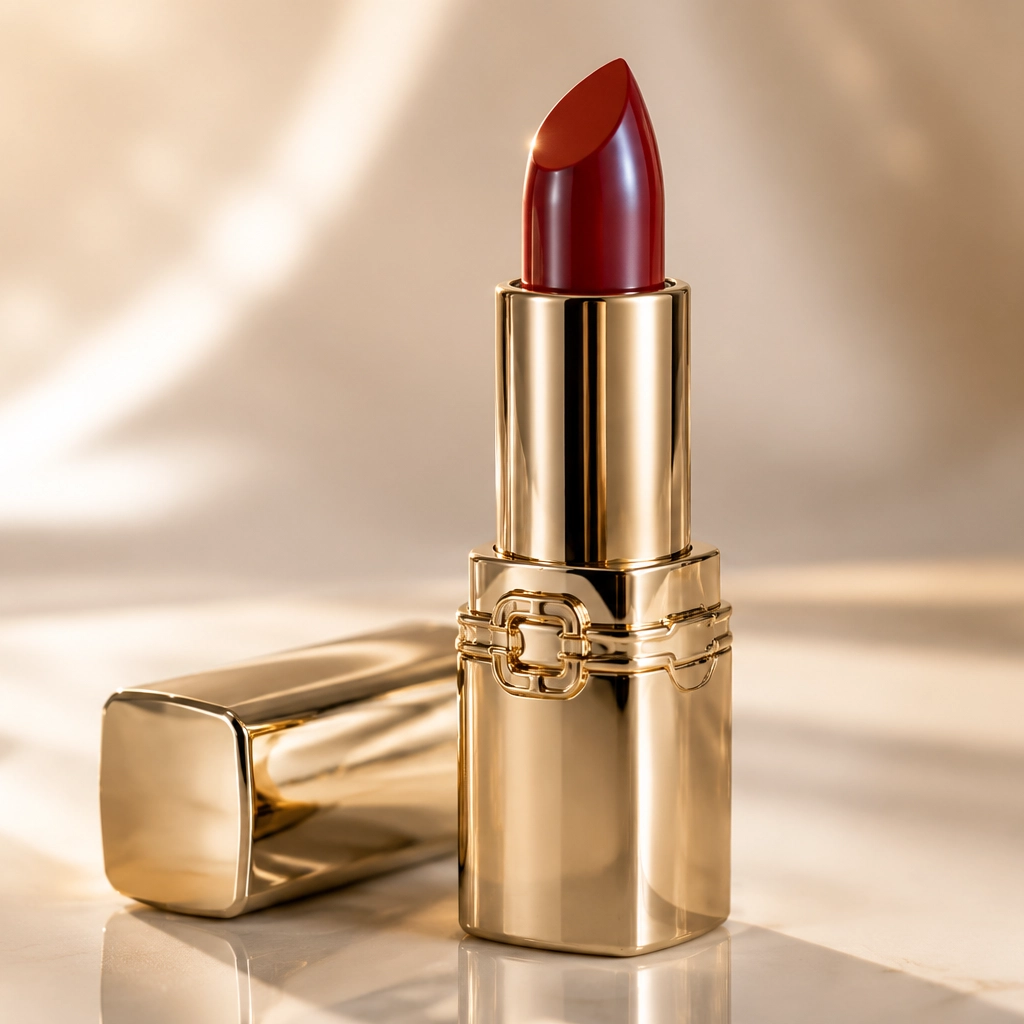
For example, gold PVD coating on stainless steel usually focuses on decorative consistency, adhesion, and durability in repeated production. Jewelry may place greater emphasis on refined appearance and color control, while plastic products require additional consideration of substrate temperature and pretreatment.
These differences are why CGVAC uses application-based equipment configuration. Jewelry, sanitary ware, ceramics, stainless steel, glass, and plastics cannot always be processed with the same fixture structure, deposition source, or recipe.
For customers evaluating a gold PVD machine for jewelry, for example, chamber size alone is not enough. Product geometry, fixture rotation, target material, required finish, batch quantity, and future color range must also be considered.
Which PVD Machine Is Suitable for Gold Coating
The right gold PVD coating machine depends on the target gold effect, substrate, coating performance, and production capacity. Buyers should focus on whether the system can reproduce the required finish consistently in batch production.
Multi-Arc Ion Plating Machine: Suitable for TiN/ZrN decorative gold coatings requiring strong adhesion, hardness, and efficient batch production. Common applications include stainless steel, sanitary ware, ceramics, hardware, and jewelry.
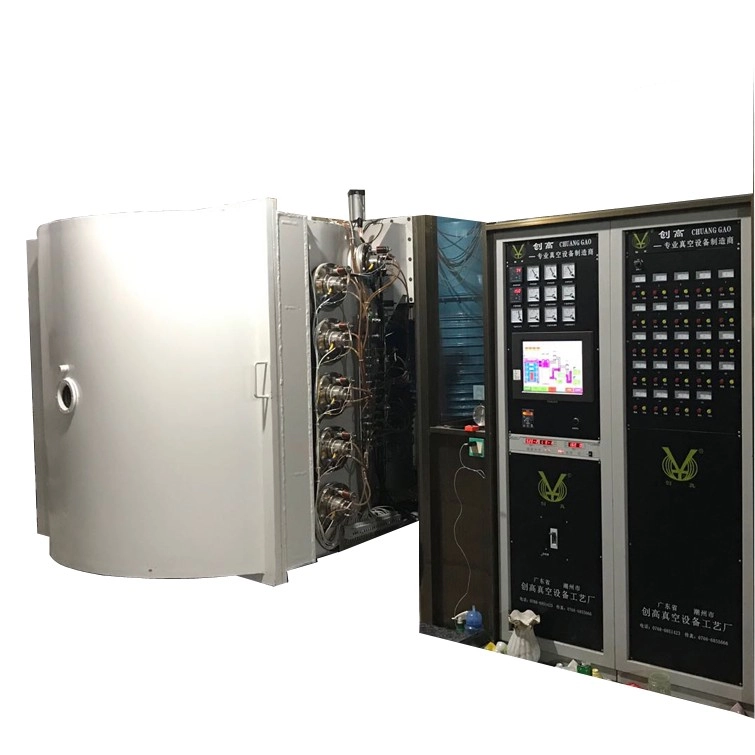
Magnetron Sputtering Machine: Better suited to smoother films, precise thickness control, and Au-based or higher-precision gold coatings. It is especially valuable when color control and film consistency are key requirements.
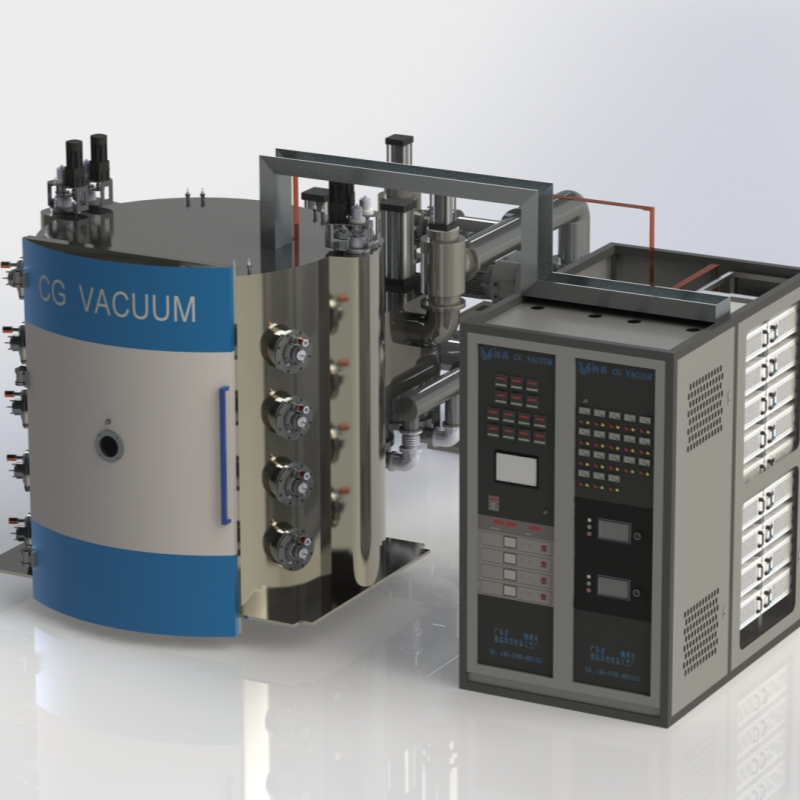
Evaporation Coating Machine: Suitable for selected decorative metallization projects where metallic appearance and production efficiency are the main priorities. Its suitability depends on the substrate, coating material, and durability target.
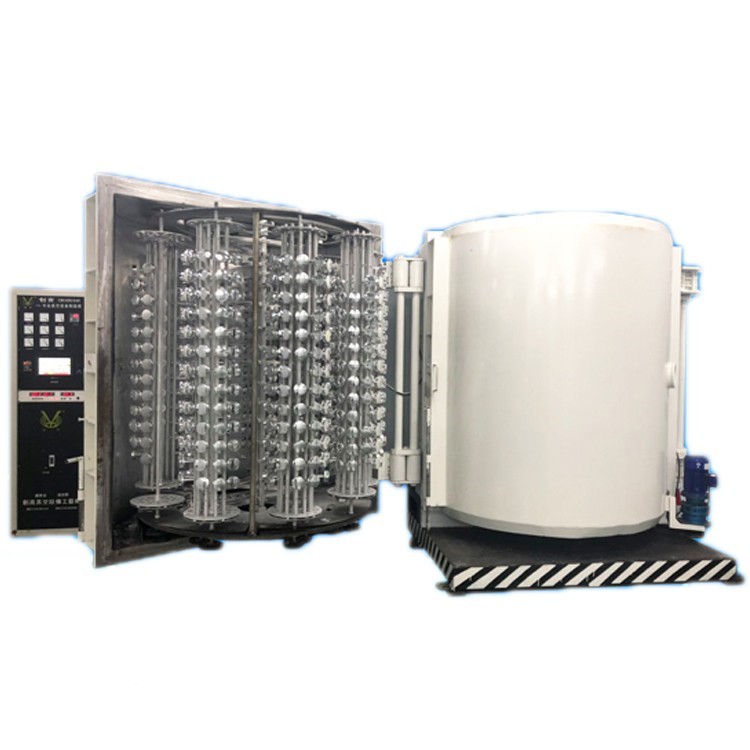
Functional PVD Machine: Suitable when the Gold PVD finish must also provide additional properties such as hardness, wear resistance, corrosion resistance, or multilayer performance. It is more relevant to projects that need both decorative appearance and functional coating performance.
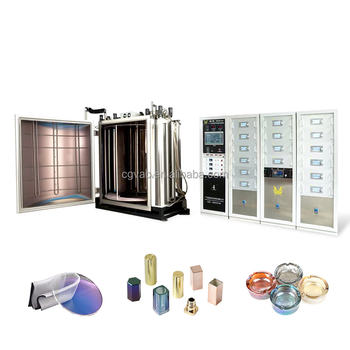
For buyers, the selection logic should be: Product → Target Gold Effect → Performance → Capacity → PVD Process → Machine Configuration
The advantage of CGVAC is not simply having multiple machine types. As a professional PVD coating machine manufacturer, CGVAC can evaluate the product, substrate, target color, coating performance, and output first, then match the appropriate deposition technology, target system, fixtures, chamber, and process route. Sample validation can further reduce machine-selection risk and improve color consistency and production stability.
From Gold PVD Samples to Stable Production with CGV
CGVAC combines process development, equipment engineering, sample validation, and long-term technical support to help buyers turn a target gold PVD coating into a stable production solution. Its value is not limited to supplying equipment, but to reducing process uncertainty, machine-selection risk, and repeated adjustments during mass production.
Application-Based Machine Configuration: CGVAC configures chambers, deposition sources, targets, fixtures, and control systems according to the product, substrate, target gold effect, and production capacity, helping the gold PVD coating system better match actual production needs.
Process and Machine Integration: CGVAC coordinates target materials, vacuum performance, gas control, power systems, fixtures, and coating parameters as one complete solution, helping improve color consistency, film uniformity, and batch repeatability.
Sample & Process Validation: Before finalizing the machine configuration, CGVAC can verify target color, adhesion, surface quality, and coating feasibility through sample testing, helping reduce equipment-selection and mass-production risks.
Engineering & Lifecycle Support: From machine design and system testing to installation, training, process adjustment, troubleshooting, and future expansion, CGVAC provides continuous technical support for stable long-term production.
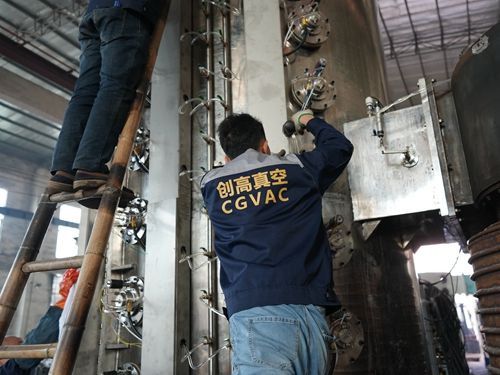


Conclusion: Turn Your Gold PVD Requirement into Production
CGVAC can develop a gold PVD coating project from product evaluation and sample validation through process matching, PVD coating machine configuration, equipment testing, and production support. Whether your project involves jewelry, sanitary ware, stainless steel, ceramics, glass, plastics, or another industrial product, the machine and process can be evaluated around your actual coating and capacity requirements.
Send CGVAC your product photos, substrate material, dimensions, target gold color, coating requirements, and expected production capacity. The technical team can use this information to evaluate the suitable PVD process, validate the coating approach, and prepare a more targeted machine configuration and quotation for your project.