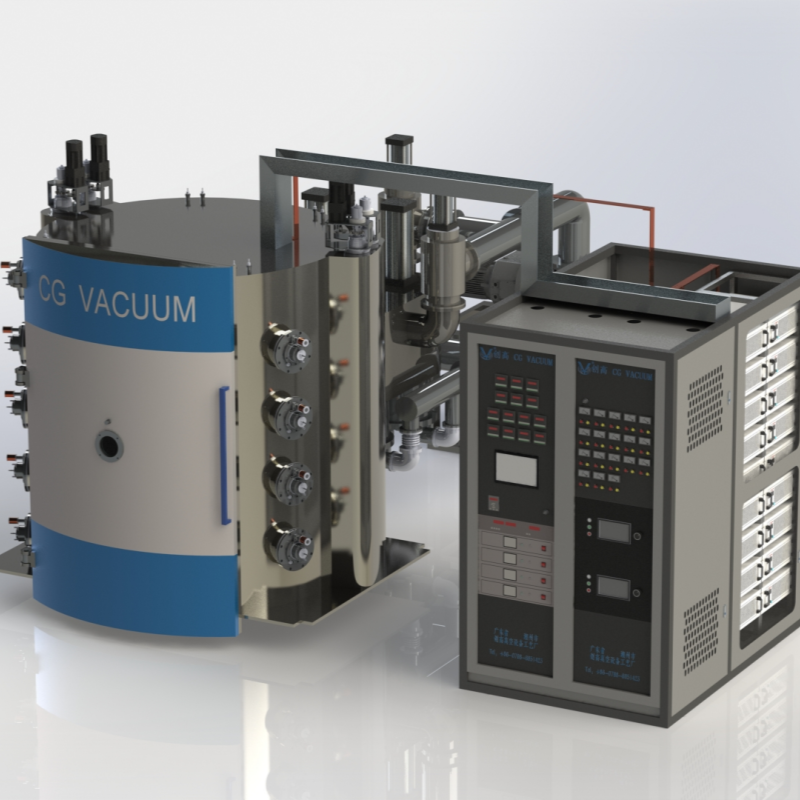
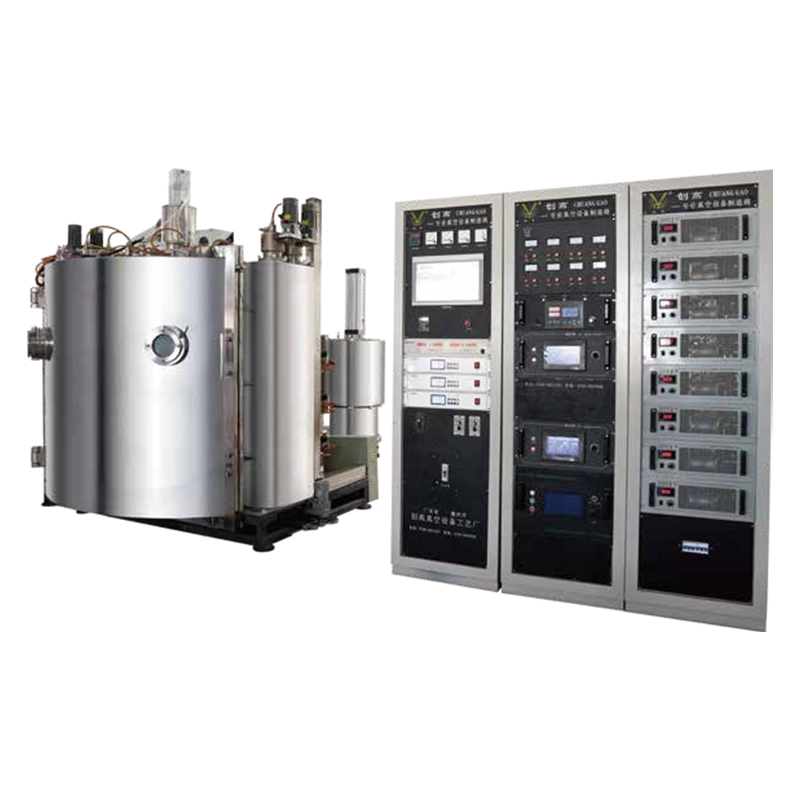
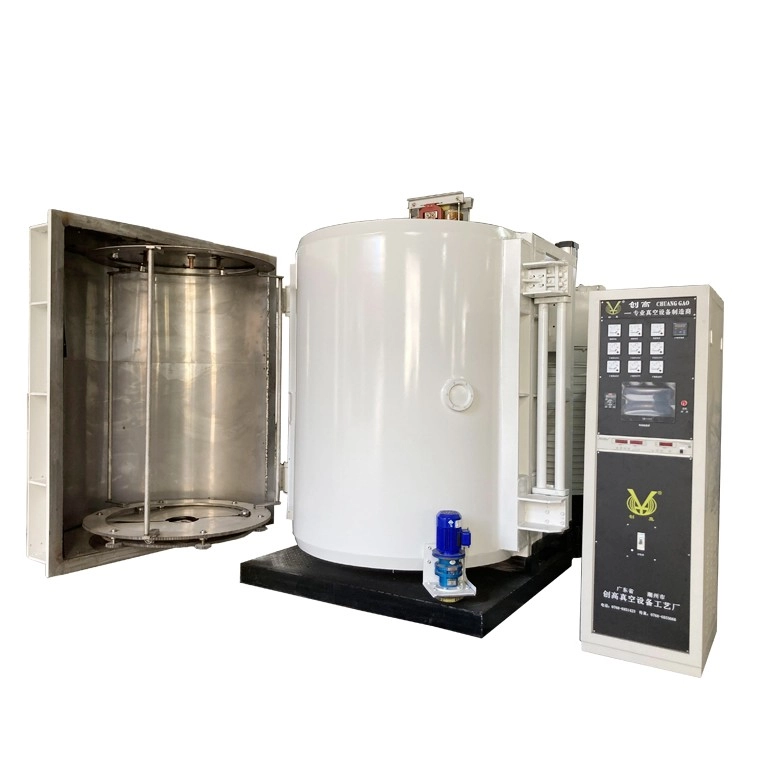
Beads may be small, but coating them consistently can be a demanding production process. Their material, size, shape, surface geometry, and batch loading requirements all affect how a PVD Coating machine for beads should be configured.
For manufacturers, choosing the right machine is not simply about chamber size or equipment price. The better approach is to match the PVD technology, vacuum system, loading configuration, and production requirements to the beads you actually manufacture.
Start With the Bead, Not the Machine
The first step in selecting a bead vacuum coating machine is understanding the product itself.
Beads can be made from glass, crystal, acrylic, resin, pearl, and other materials. Different materials may have different requirements for surface preparation, thermal exposure, and coating compatibility. At the same time, bead diameter, shape, and surface geometry influence how the products should be positioned during deposition.
A round bead, for example, presents a different coating challenge from a flat decorative component. Even when the same color is required, the equipment configuration may need to change because the products interact differently with the coating source during deposition.
This is why there is no single PVD coating machine for beads that is ideal for every manufacturer. Before requesting a quotation, it is useful to provide the equipment manufacturer with information such as bead material, dimensions, product photos, target finish, and expected production volume. These details provide a practical basis for evaluating the coating system instead of recommending a generic machine.
The Coating Requirement Determines the Equipment Approach
For bead manufacturers, the primary objective of PVD coating is often decorative. Metallic colors and special finishes can be used to create different visual effects and product designs. However, specifying a color is only the beginning of the equipment selection process.
The production requirement may also include color consistency between batches, surface brightness, coating uniformity, adhesion, and resistance to handling or service conditions. These requirements influence the selection of PVD technology and the overall machine configuration.
For example, a manufacturer producing large quantities of decorative beads may place greater emphasis on batch consistency and production efficiency, while a manufacturer producing specialized or higher-value beads may give greater weight to surface appearance and process control.
The machine should therefore be evaluated against the complete coating objective rather than against color alone.
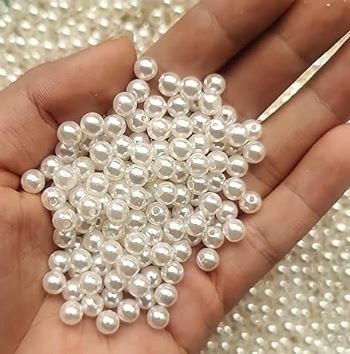
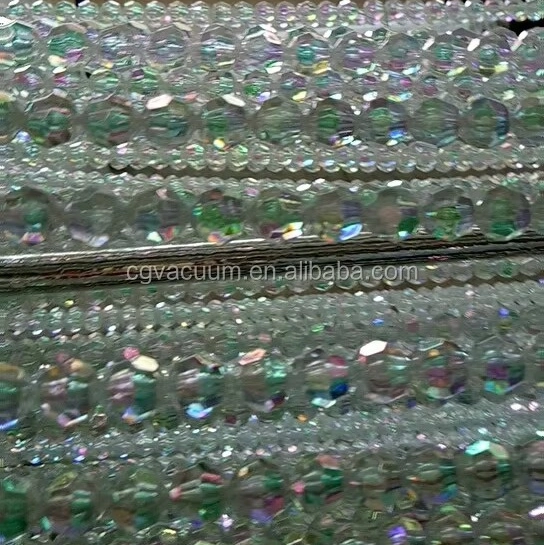
How Bead Geometry Affects Machine Configuration
Small products create a particular challenge in vacuum coating. A large number of beads may be loaded into a chamber, but the position and orientation of each product still influence the coating result.
Simply increasing the number of pieces in a batch does not automatically improve production efficiency. If the products are positioned poorly relative to the coating source, some surfaces may receive different deposition conditions from others.
This makes the fixture and rotation system an important part of the equipment discussion.
The appropriate loading arrangement depends on bead size, shape, quantity per batch, and the selected coating process. A manufacturer producing several bead sizes may also require more flexible loading and fixture arrangements than a factory focused on one standardized product.
For this reason, actual bead samples, product drawings, or photographs can be valuable when discussing equipment with a manufacturer. The objective is to determine how the products can be loaded and positioned effectively as a batch, rather than simply calculating how much physical space is available inside the chamber.
Choosing Between Main PVD Coating Technology
There is no single PVD technology that is automatically the best choice for every type of bead.
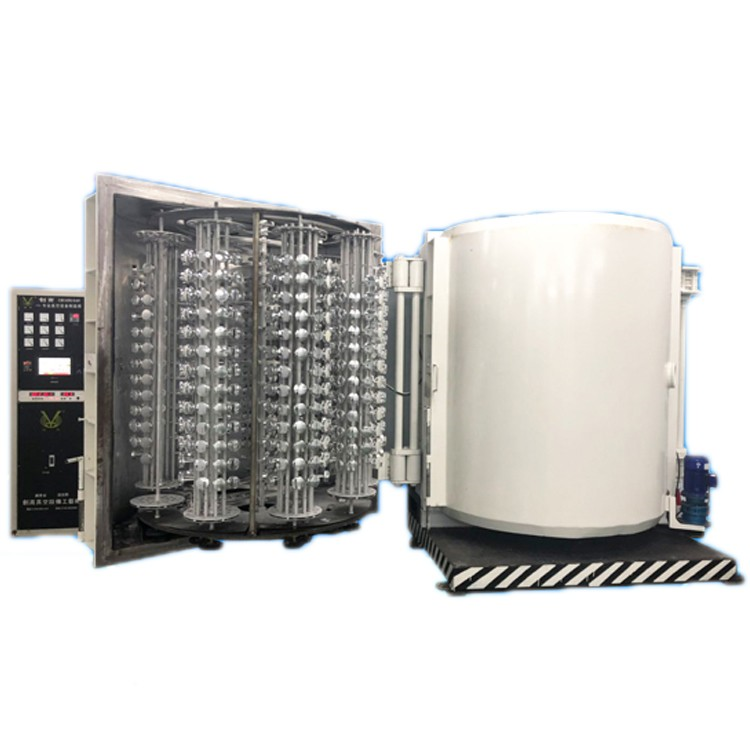
CGVAC provides different PVD-Beschichtungsmaschine technologies, including evaporation, magnetron sputtering, and multi-arc ion coating systems. The appropriate process depends on the product material, geometry, required finish, coating performance, and production requirements.
Vakuumverdampfung
Evaporation uses a high-vacuum environment to vaporize the coating material. The resulting vapor travels through the chamber and condenses on the product surface.
For decorative bead applications, evaporation can be considered when the required coating appearance and production process are compatible with this deposition method. CGVAC also provides customized evaporation equipment for bead coating applications.
The important point is that the suitability of evaporation should be evaluated against the specific bead material, surface requirements, loading arrangement, and production objectives.
Magnetronzerstäubung
Magnetron sputtering uses a plasma-assisted process to eject atoms from a target and deposit them onto the substrate. The process can provide controlled deposition and is widely used for applications where film quality and uniformity are important.
For bead production, magnetron sputtering may be considered when the application requires controlled deposition and specific surface characteristics. The final configuration still needs to be evaluated according to bead material, geometry, coating requirements, and production conditions.
Mehrbogen-Ionenbeschichtung
Multi-arc ion plating uses cathodic arc discharge to generate ionized metal plasma. It can provide high deposition efficiency and strong ion bombardment, making it suitable for certain decorative and functional coating applications.
Whether multi-arc ion plating is appropriate for a particular bead product depends on the required coating characteristics and surface appearance. It should therefore be evaluated as part of the complete process rather than selected simply because it provides a high degree of ionization.
The practical approach is to compare the technologies according to the bead material, product geometry, desired finish, coating performance, and production requirements.
Why the Vacuum System Matters
The coating source receives much of the attention when manufacturers compare PVD machines, but it is only one part of the complete system.
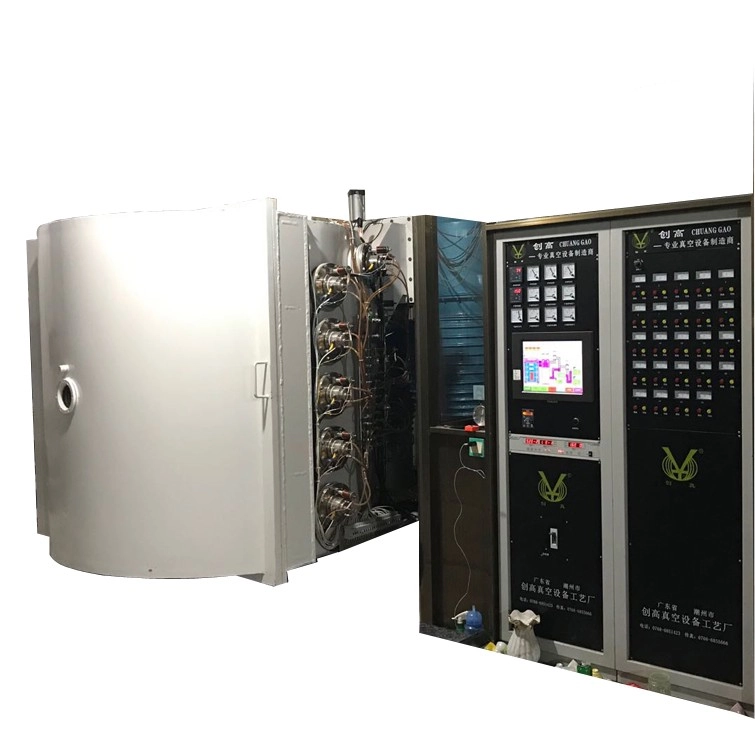
A Vakuumbeschichtungsmaschine needs a controlled chamber environment in which residual gases can be removed and the deposition process can be maintained. The vacuum chamber, pumping system, measurement instruments, valves, and control system work together to establish the conditions required for the coating process.
Gas control is also important when reactive PVD processes are used. Process gases are introduced under controlled conditions to obtain the required coating composition. The appropriate gas system and operating conditions depend on the selected coating material and process design, so fixed gas ratios should not be treated as universal specifications.
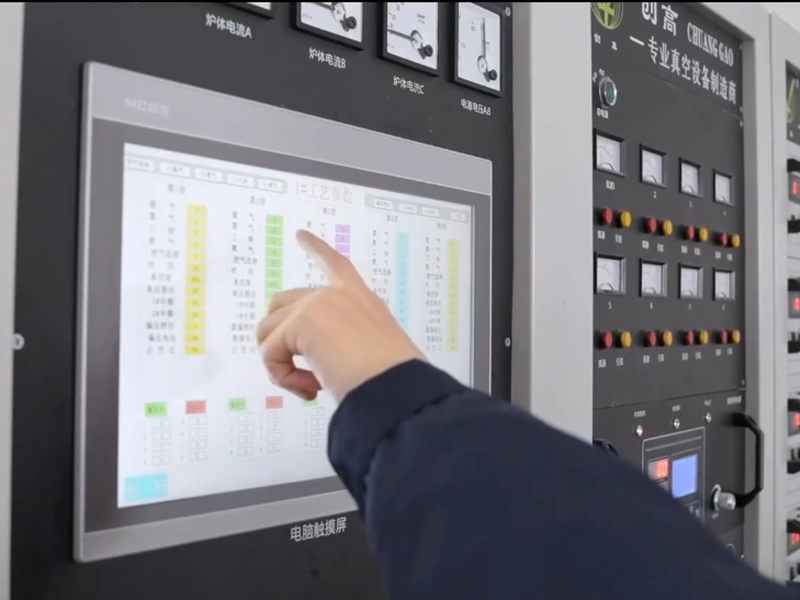
For bead production, stable process conditions become particularly important when large batches need to be processed repeatedly. A machine should provide a controlled environment that supports consistent production rather than simply achieving a suitable result during an individual trial.
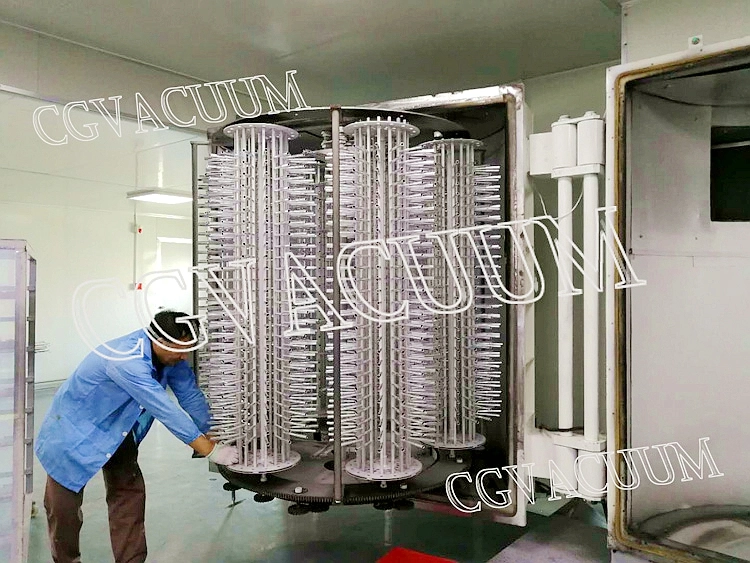
Production Capacity Is More Than Chamber Size
One common mistake when purchasing coating equipment is comparing machines mainly by chamber dimensions.
A larger chamber does not automatically mean a more efficient bead production line. Actual production performance depends on how many products can be loaded effectively, how they are positioned, how the coating process is organized, and how consistently the system can reproduce the required conditions.
For example, increasing the number of beads in a batch may appear to improve output, but if product positioning becomes unfavorable and coating consistency decreases, the additional loading capacity may not translate into better overall production efficiency.
A more useful discussion with the manufacturer should therefore include:
- Bead material
- Bead size and shape
- Approximate quantity per batch
- Required coating color or finish
- Expected production volume
- Product loading requirements
- Existing coating problems, if applicable
- Required level of automation
This information allows a PVD coating machine manufacturer to evaluate the equipment configuration according to the actual production requirements.
Process Repeatability Matters in Batch Production
For decorative beads, consistency can be just as important as the ability to produce a particular color.
A manufacturer may process multiple batches of the same product every day. If the coating conditions vary significantly between batches, differences in color, brightness, or surface appearance can become a quality-control problem.
Process repeatability depends on the complete equipment system. The vacuum environment, coating source, gas control, power settings, product loading, rotation, and other process conditions need to work together within a stable production process.
The exact operating parameters should be developed and optimized according to the substrate, coating material, product geometry, and selected PVD process rather than copied from another application.
This is an important consideration when comparing PVD coating machine manufacturers. The machine should provide a stable platform for process development and repeatable production, not simply a vacuum chamber with a coating source.
When Should You Consider a Customized Beads PVD Coating Machine?
A standard machine may be sufficient for a relatively straightforward production requirement. However, customization becomes more relevant when the product range or production process is more specialized.
For example, customization may need to be considered when a manufacturer handles different bead sizes, works with multiple materials, requires a particular loading arrangement, or has specific production targets.
CGVAC approaches bead coating equipment according to the application rather than applying one fixed configuration to every customer. The equipment can be evaluated around factors such as bead material, size, desired finish, production capacity, and coating process.
The purpose of customization is not simply to make a machine larger or add more components. It is to make the equipment configuration fit the actual production process.
Depending on the application, this may involve the vacuum chamber arrangement, fixture design, loading system, coating technology, rotation configuration, or process-control system.
What Information Should You Give a PVD Machine Manufacturer?
If you are requesting a quotation for a PVD Coating machine for Beads, avoid sending only a product name and asking for a machine price.
A manufacturer can provide a more meaningful recommendation if you provide basic production information:
| Information | Why It Matters |
|---|---|
| Bead material | Helps evaluate process compatibility |
| Bead size and shape | Influences fixture and loading design |
| Product photos or drawings | Helps evaluate product geometry and surface requirements |
| Target color or finish | Helps determine the appropriate coating approach |
| Quantity per batch | Helps evaluate loading and production requirements |
| Expected production volume | Helps determine the appropriate system configuration |
| Existing coating problems | Helps identify process or equipment requirements |
This turns the conversation from a simple equipment quotation into an actual PVD coating solution evaluation.
How CGVAC Approaches Beads PVD Coating Equipment
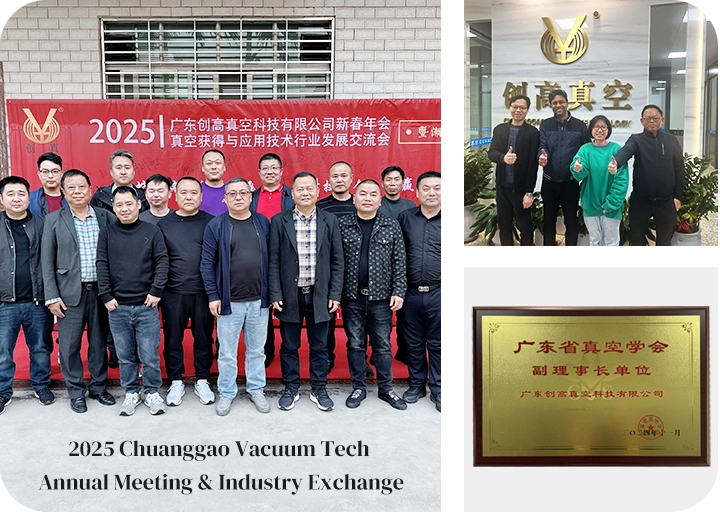
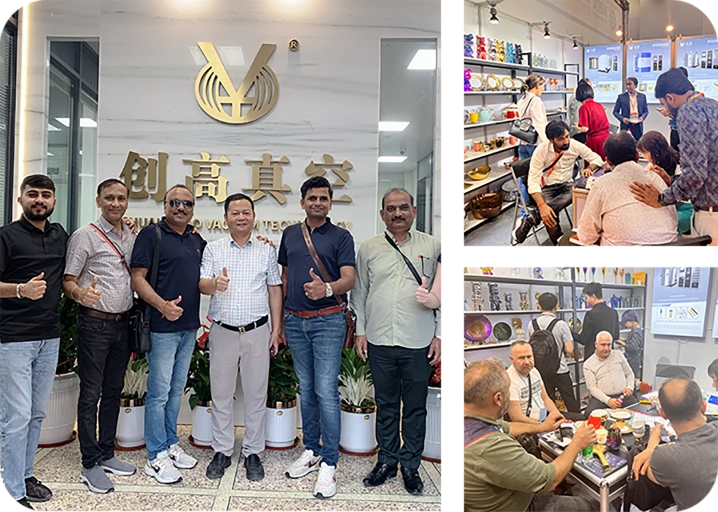
CGVAC ist eine PVD coating machine manufacturer focused on vacuum coating equipment and customized PVD coating solutions for industrial applications.
Its equipment portfolio includes Magnetron-Sputter-Vakuum-Beschichtungsanlagen, multi-arc ion coating machines, evaporation systems, and functional PVD equipment. These technologies can be considered according to different coating requirements and production applications.
For bead manufacturers, equipment selection starts with the product and production requirement rather than a fixed machine configuration. Glass beads, crystal beads, acrylic beads, and other decorative components may require different approaches depending on their material, geometry, target finish, and production process.
CGVAC can evaluate these requirements and develop a suitable customized PVD coating system around the application. The goal is to connect the coating technology and equipment configuration with the actual production needs rather than simply supplying a standard vacuum chamber.
For more information about CGVAC’s equipment portfolio, explore the PVD-Beschichtungsmaschinen available for different industrial applications.
Get the Right PVD Coating Machine for Your Beads
Choosing a PVD Coating Machine for Beads should begin with the products you need to manufacture, not with a machine specification sheet.
Bead material and geometry influence the coating process. The desired finish influences technology selection. Batch quantity affects loading and production design. Process stability affects consistency. Together, these factors determine what kind of vacuum coating equipment makes sense for your production requirements.
If you are planning a new bead coating project or evaluating equipment for an existing production line, send CGVAC your bead material, size, product photos, target finish, and expected production volume. This information allows the CGVAC team to evaluate the application and discuss a suitable equipment configuration.
Looking for a PVD coating machine for bead production? Explore the PVD-Beschichtungsanlage für Perlen solution or contact CGVAC to discuss your application requirements.
Schlussfolgerung
Choosing the right PVD Coating machine for beads is ultimately not about selecting the machine with the most specifications. It is about matching the coating technology, vacuum environment, loading configuration, process control, and production capacity to the beads you actually manufacture.
For manufacturers planning a new production line, expanding bead coating capacity, or looking for a more suitable coating process, working with an experienced vacuum coating machine manufacturer can help turn product requirements into a practical equipment configuration.